For the greater part of my adult life, I was one hundred percent certain I did not want children. Many of my closest friends felt the same, and we bonded over the luxuries of free time and choice. We laughed about the ludicrous things people would ask us, like “aren’t you worried one day you’ll regret it, and it’ll be too late?”
The earliest stories my mother tells of me playing with dolls are not about how nurturing I was, but how savage. I would cut off all their hair, paint their faces blue, etc. I dreamed not of nursery themes, but a library with a ladder. And when I saw pregnant women on the street I experienced not envy but something more akin to pity.
I am incapable of being a mother – that’s what I thought. This sense was born from a mix of many factors: my fervent feminist values, the birth trauma in my family line, my history with eating disorders and depression, the bottomless terror of what might happen in pregnancy, and so on. But when I fell in love with someone who was set on being a father, I started to pull apart my concerns and ask the question yes, was I capable of being a mom… but also did I want to be?
I had settled on a solid *maybe* on both accounts when I found out I was pregnant. Until then, I’d (mostly) been able to arrange my life to maintain a fragile illusion that I was in full control. Pregnancy shattered that, pushing me past my edges so quickly. Coupled with non-stop nausea, hormone and body changes, etc., the whole experience was mostly unbearable. I was out of my skin with anxiety. It got worse, better, worse. And then? After a traumatic labour, my son was earth side… and I? Was no more certain of anything.
For some mothers, the nurturing gene seems to toggle on easily. Good for them. That wasn’t my experience. There was a period where my bond with Bodhi hadn’t yet taken deep roots and I subsisted on faith alone I would figure this out. I felt confused, clumsy, bad at it. No one really explained how messy and sad and lonely it would be. How heavy and absolute the weight of his dependence would feel. Or how I would be consumed with grief, and shame about that grief (because was it just me?), yearning for days when my arms were free and my house was quiet. But also, no one really explained how purposeful and proud I would feel, like nothing I’d ever experienced. While it didn’t come easy, it did feel exactly right. I felt honoured: like I’d been specifically chosen for this sacred and life-affirming assignment. This paradox was hard to parse.
In her book all about love, bell hooks says, “to know love we have to tell the truth to ourselves and others.” Truth telling calls us to check our blind spots. Some of mine were personal: relics of decades of therapy and overcorrections on boundaries and self-reliance. Yeah, sure; but some were systemic – as in, planted at the level of a system, dancing around in my collective subconscious and invisibly informing how I conceived of the world.
In the west, we live under a system that exploits most people and the planet for the benefit of a few. To keep this outrageous harm unclear to us, this system might, for example, fill our media with stories that downplay, override, and obscure how we are at our very best when in deep relationship. Connection is, you see, a threat to our bottomless, zombie-like consumption. This system might offer vague and conflicting stories about love, too; ones that say while love can be great it is mysterious, unreliable, and unravelling. It would never teach you about love as a living thing which requires consistent, thoughtful care to stay alive.
So, you know, I came by my confusion about relationships and how to love honestly.
In The Road Less Traveled, M. Scott Peck defines love as “the will to extend one’s self for the purpose of nurturing one’s own or another’s spiritual growth.” I keep rereading that part about the purpose of, because it explains the benefits of sacrifice as much more than a one-sided transaction. I think Peck means that if we are willing to reckon with the flaws in our conditioning and to participate in the disciplined work of loving—the kind that often inconveniences us, pushes us to our limits and asks us to hold complexity—we will be liberated from the fictions that harm us. We will unravel how restrained our conceptions of time, energy, and the point of life itself have been.
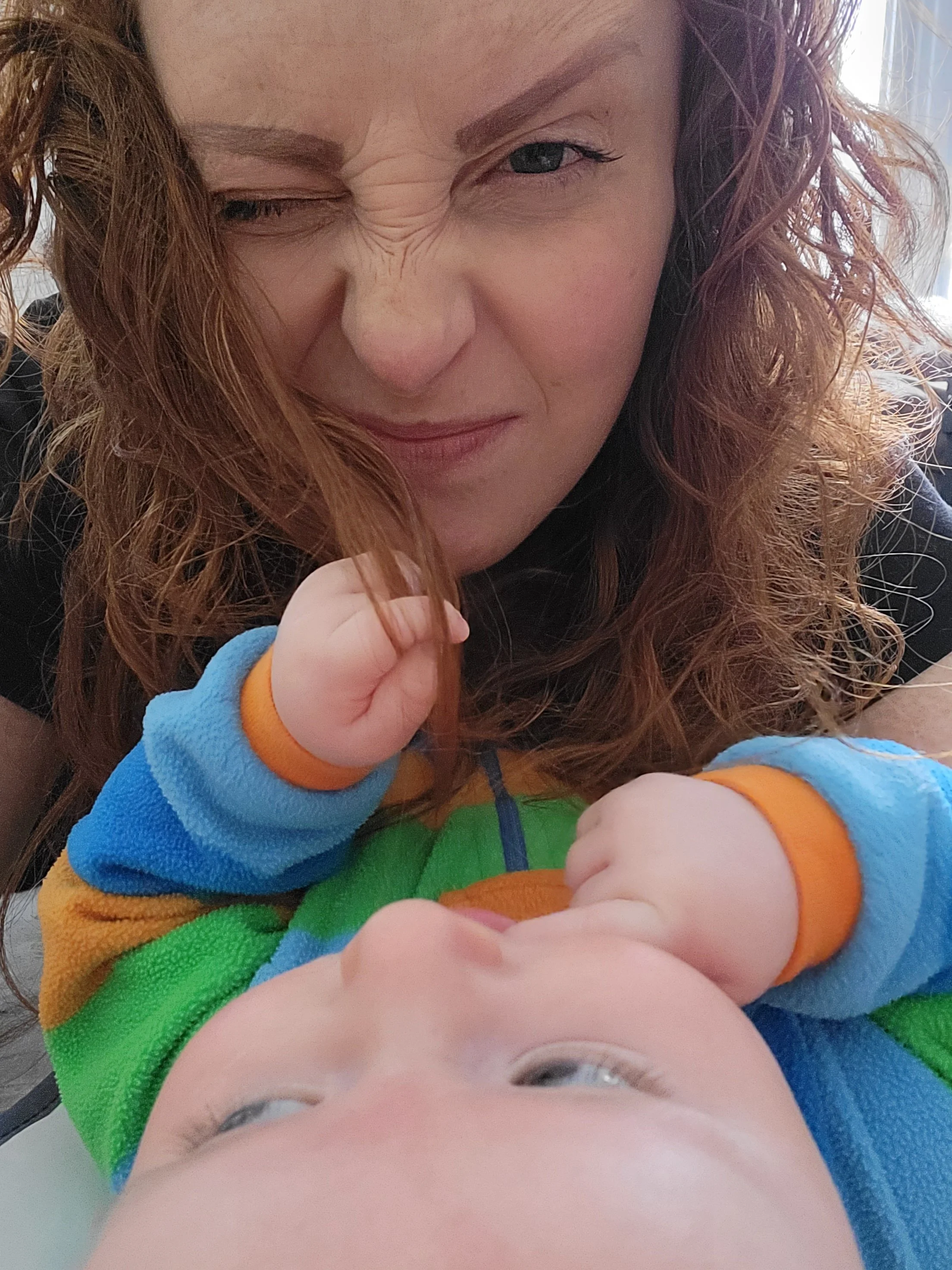
In a word, motherhood has been clarifying, like an antidote to some shitty drug I’ve been sedated by all my life. It made visible and personal what was always there—our undeniable interconnectedness— and in turn, the cost of this Crisis of Disconnection we’re in. Motherhood called me in off the sidelines with a stern and tender voice and said, hey. These are not someone else’s problems. Stop chasing illusions my dear one and wake up, wake up, wake up.
Now listen. I’m not suggesting that motherhood is the only path. But I do believe this pathological forgetting of what matters is eroding our foundational infrastructure and we’ve all got to reckon with that like, yesterday. I believe we’ve all got to ask, truly: what is more worthy of our time and energy than each other?
Perhaps what’s most powerful about motherhood though is the accountability. When my inquisitive son asks me (because he will) how men with hard hearts have been allowed to plunder our planet and put our species at risk, I want to have a better answer than, “I don’t know,” and “there’s nothing we can do about that.”
I want to be able to say, with heartbreak, that many of us have lost our way; but also, to say with hope and conviction that we can find our way back through love and that we must. I want to be able to say that while the work to extend ourselves for others is hard, it is also beautiful. It will make you more fully human and impervious to systemic attempts to scramble the truth.
But what I want to say will only feel honest if I do this work myself. Everyday, just continuing in my own voice out loud, saying don’t forget, don’t forget, don’t forget.